AI Adoption Playbook.
An assurance-engineered strategy for safe, secure, trustworthy AI adoption.

1. Understand use case.
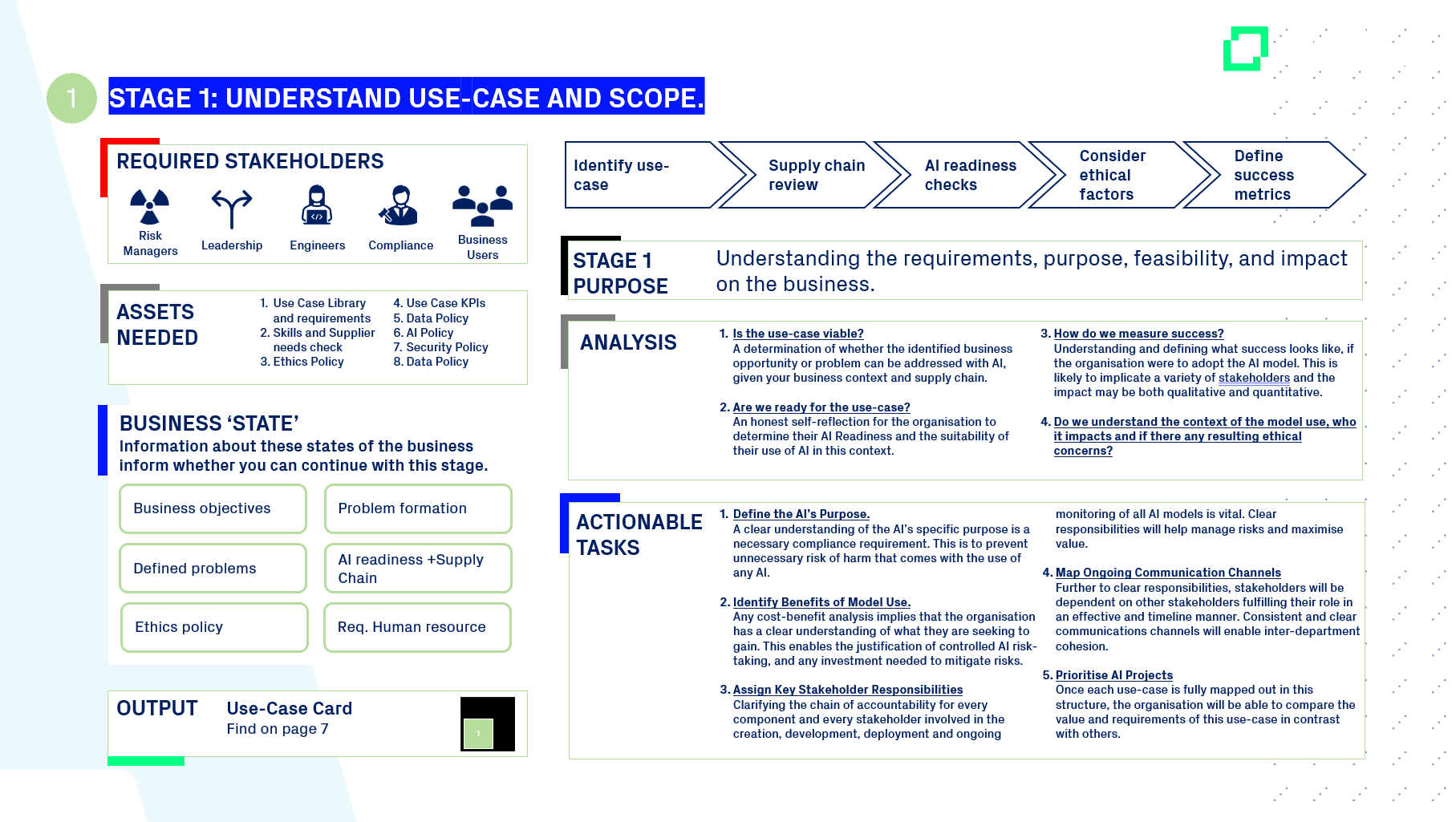
Clarify the model’s purpose, value, and business impact. Define success and key context and ethics questions.
Is the use-case viable?
Are we ready for the use-case?
How do we measure success?
Do we understand the context of the model use, who it impacts and if there any resulting ethical concerns?

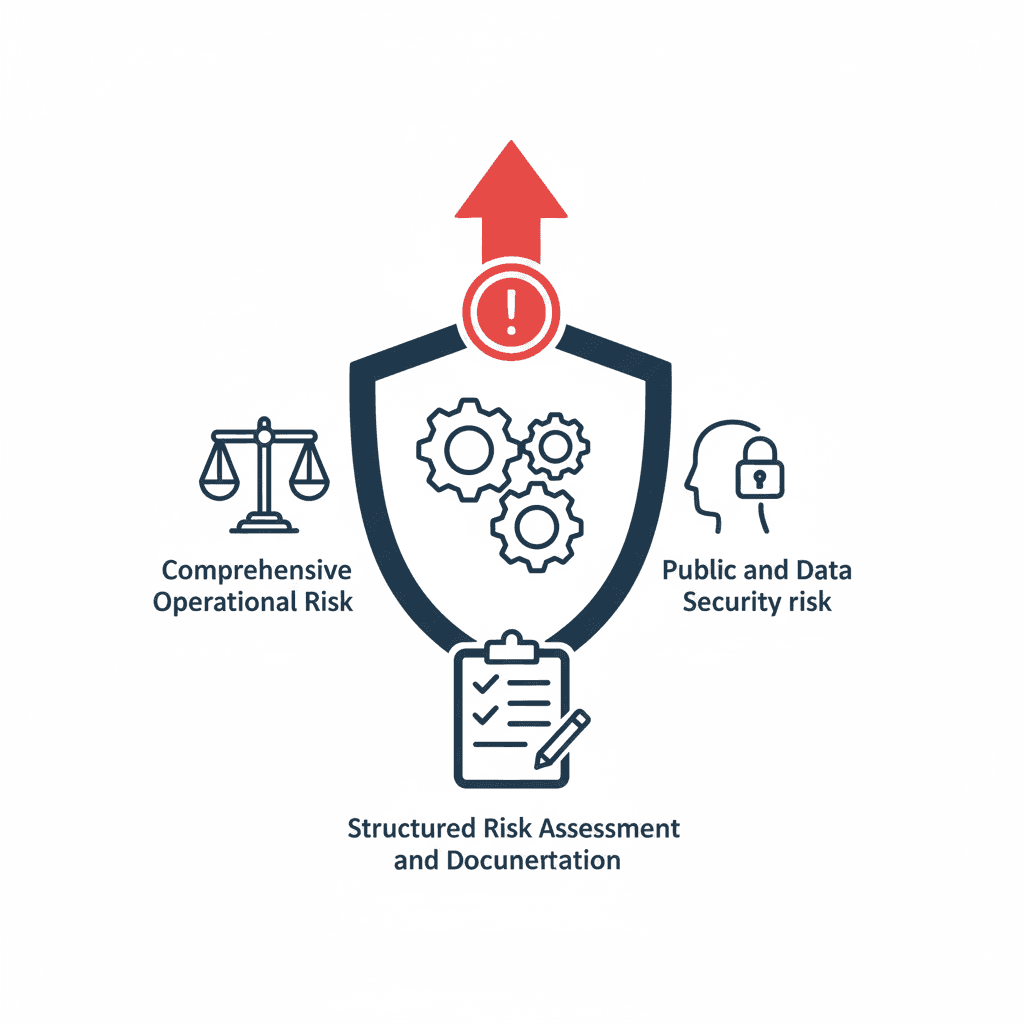
2. Measure risk.
Evaluate public, legal, and operational risks. Perform structured risk assessments and document implications including data and security.
Do we understand the risks involved?
Have we performed a risk assessment?
Do we understand the context and impact of the use-case?
Do we understand the relevant implications, such as Legal, Data and Security?
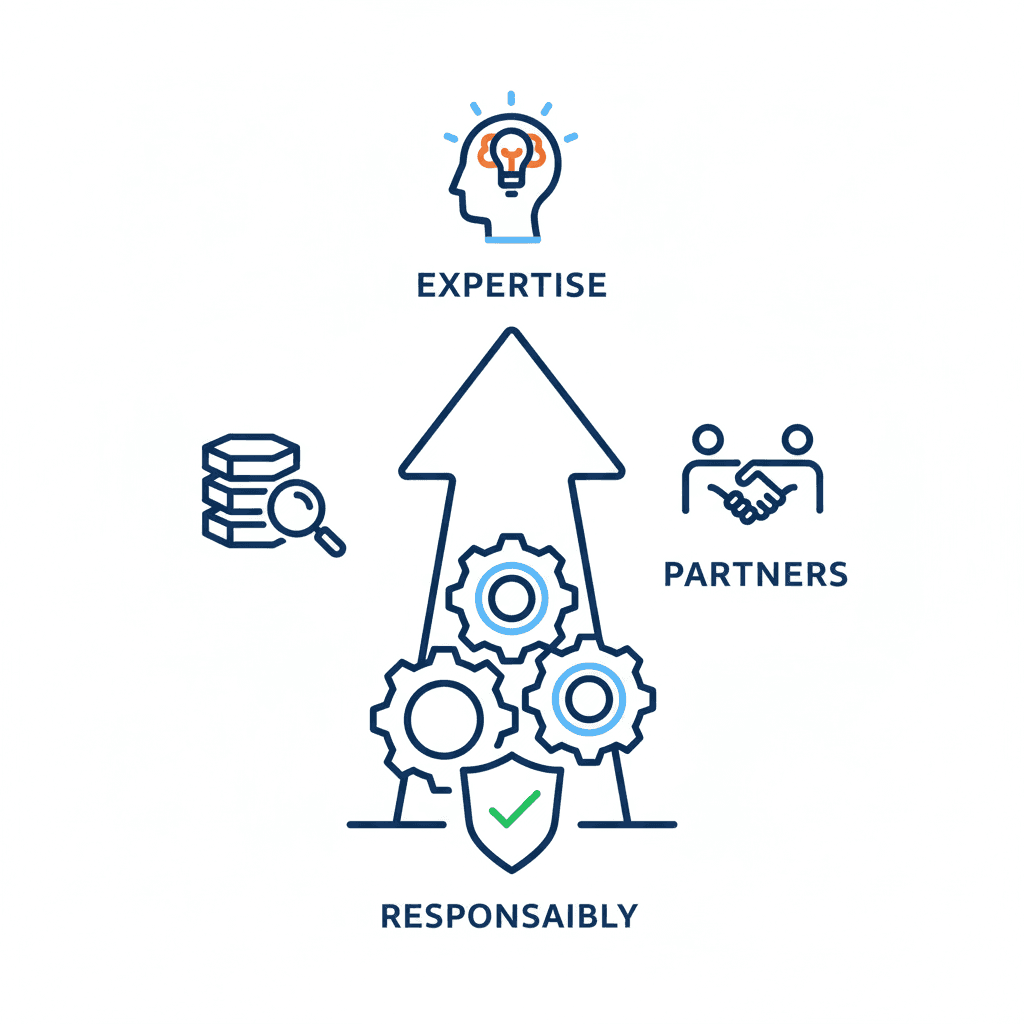
3. Resources.
Assess if you have the necessary data, expertise, and partners to meet objectives efficiently and responsibly.
Do we have or need Suppliers?
Do we have the expert knowledge?
Is data fit for use case? Is it labelled?
Do we have the required IT Skills and resources?
Instructional Card Overview
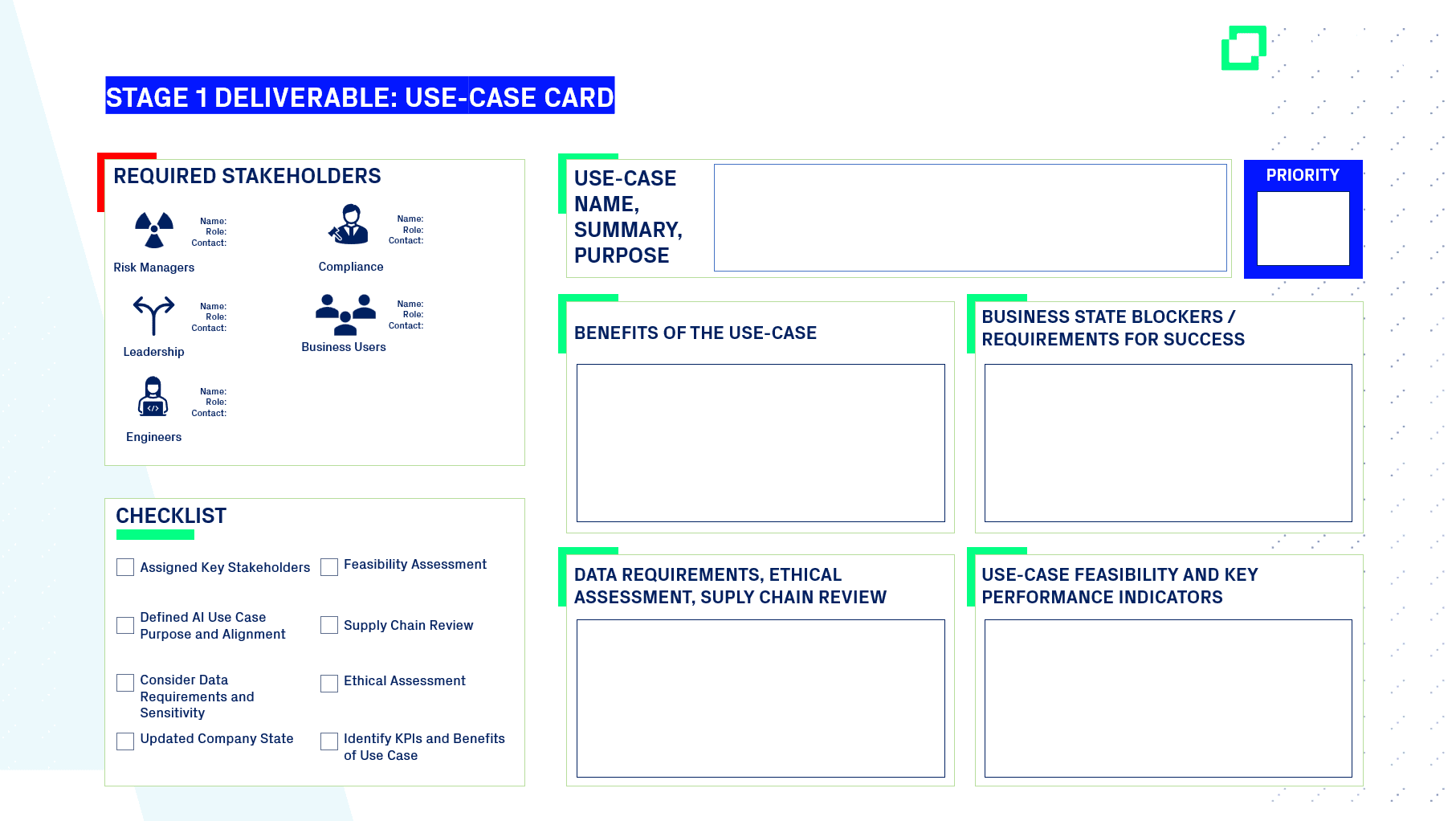
Each stage of the playbook includes an instructional card that guides the deliverables for that phase: outlines key stakeholders required, assets and knowledge (Business State), and incremental actionable tasks. These cards are designed to provide focus and structure, and each stage ultimately produces a card deliverable.
Use-Case Cards
A Use-Case Card is produced at the end of Stage 1: Understand Use Case and Scope. These cards standardize how you evaluate and compare possible AI projects so you can decide which to pursue.
For Stages 2–5, the outputs are: Risk Assessment Card, Resources Card, System Card, and Monitoring Card. Collect these cards as you progress, building a living record to revisit and compare projects as your business evolves.
Distinct Cards for Stages 2–5
Stage 2: Risk Assessment Card — Evaluate risks to anticipate and address issues proactively. This card outlines required risk assessment actions and the documentation of mitigation strategies.
Stage 3: Resources Card — Identify and organize all data, expertise, and partnerships needed to meet your objectives. This card serves as your checklist for data quality and the skills or resources required.
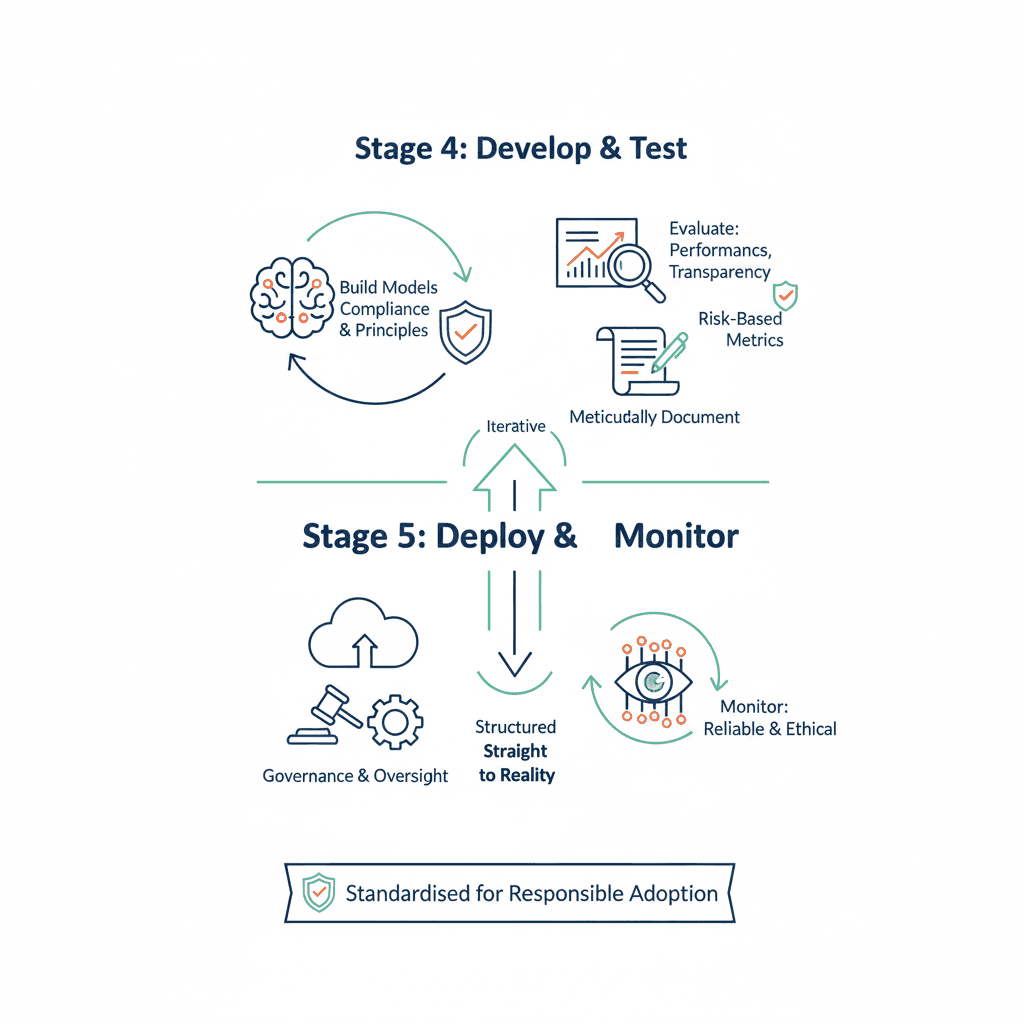
Stage 4: System Card — Build, test, and validate your AI model. Track technical milestones and compliance, focusing on clear documentation of performance, robustness, and transparency. Stage 5: Monitoring Card — Ensure reliable and ethical performance post-deployment, including continuous governance and operational oversight. Collect cards for each stage—Risk, Resources, System, and Monitoring—to form your project’s living record.
Key Stakeholders
Effective AI adoption relies on distinct, engaged roles at each playbook stage. Here are the essential stakeholders and their core contributions:
Leadership
Provide strategic direction and resource allocation for AI initiatives.
Risk
Identify and mitigate potential threats associated with AI deployments.
Compliance
Ensure AI practices adhere to legal and ethical standards.
Engineers
Develop and maintain the technical infrastructure of AI systems.
Scientists
Conduct research and develop algorithms to improve AI capabilities.
Supplier Managers
Manage relationships with external vendors supplying AI technologies and services.
Users
Interface with the AI system, providing feedback for refinement and improvement.
Start your AI transformation today.
Download the free Assurance-Engineered AI Adoption Playbook and lead your organization with confidence.
All the tools you need one resource.